 CPSC
CPSC 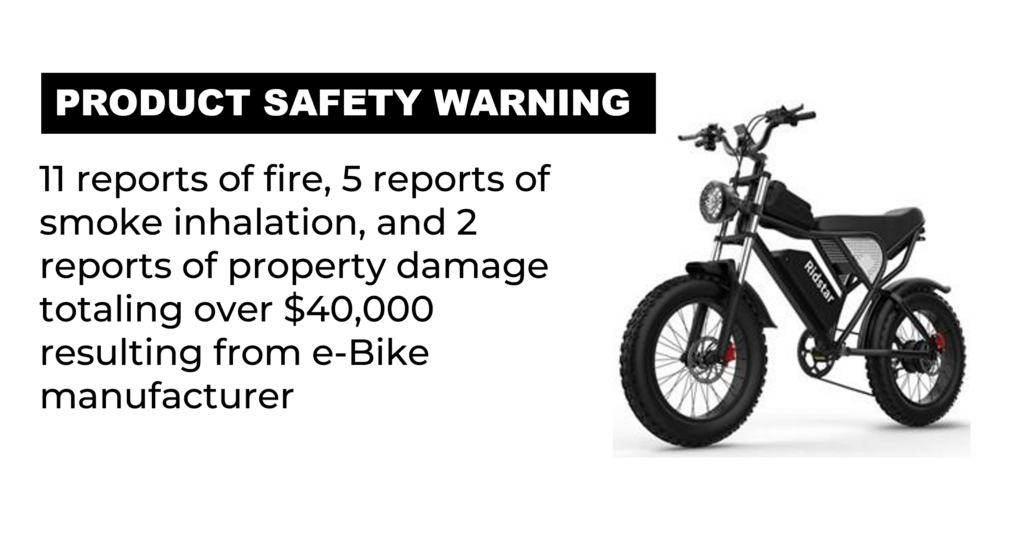
E-bikes have transformed the way millions of Americans commute, exercise, and get around — but the lithium-ion batteries that power them carry a risk that far too few riders fully understand. E-bike battery fire hazards have become one of the fastest-growing categories of product safety incidents in the United States, with fires breaking out in apartments, garages, and storage areas with little warning and devastating speed. Unlike a typical house fire, a lithium-ion battery fire can ignite spontaneously, burns at extreme temperatures, and can reignite after appearing to be extinguished. The consequences range from minor property damage to fatal injuries — and the risk is not limited to cheap or obscure brands.
e-bike and e-scooter fires cause disproportionately severe injuries compared to other product fires
The core problem lies in a phenomenon called thermal runaway — a chain reaction inside a lithium-ion cell where heat generates more heat, ultimately causing the battery to vent flammable gas, catch fire, or explode. Defective wiring, substandard battery management systems, manufacturing shortcuts, and improper charging practices can all trigger this reaction. According to the National Fire Protection Association’s E-Bike and E-Scooter Safety resource, e-bike and e-scooter fires cause disproportionately severe injuries compared to other product fires — largely because they often occur indoors, at night, and with almost no warning time for occupants to escape. Riders and households that store or charge e-bikes inside living spaces are at the highest risk. The NFPA recommends never charging lithium-ion batteries overnight or while unattended, keeping bikes away from exits, and using only manufacturer-approved chargers and replacement batteries.
When a federal safety agency issues a warning to stop using an e-bike — particularly when a manufacturer has refused to cooperate with a formal recall — consumers must treat that warning with the same urgency as an official recall. The absence of a formal recall does not mean the product is safe; it often means the situation is more urgent, not less. Stop using the product immediately, remove and isolate the battery away from flammable materials, and follow your municipality’s hazardous waste disposal guidance for defective lithium-ion batteries. Do not place a defective lithium-ion battery in standard trash, curbside recycling, or the used battery collection boxes found at retail stores — these batteries require dedicated hazardous waste handling. Contact your local household hazardous waste (HHW) center before dropping off, as not all facilities accept defective cells..
Final Thoughts
E-bike battery fire hazards are a growing threat — and the consumers most at risk are often those who had no idea their product was dangerous until something went wrong. RecallSentry™, operated by the Center for Recall Safety, tracks active CPSC warnings and recalls across product categories so you don’t have to monitor federal databases manually. If you own a recalled or flagged product, visit RecallSentry to find out what steps to take and how to protect your household.
Learn more about how RecallSentry helps protect families here:
https://centerforrecallsafety.com/recallsentry
How this Article is Relevant
For more information related to this topic, refer to this recent CPSC warning: CPSC Warns Consumers to Immediately Stop Using Ridstar E-Bikes Due to Fire Hazard; Risk of Serious Injury or Death.

 RecallSentry™ App
 FDA Recalls
 USDA Recalls
 NHTSA Recalls