 CPSC
CPSC 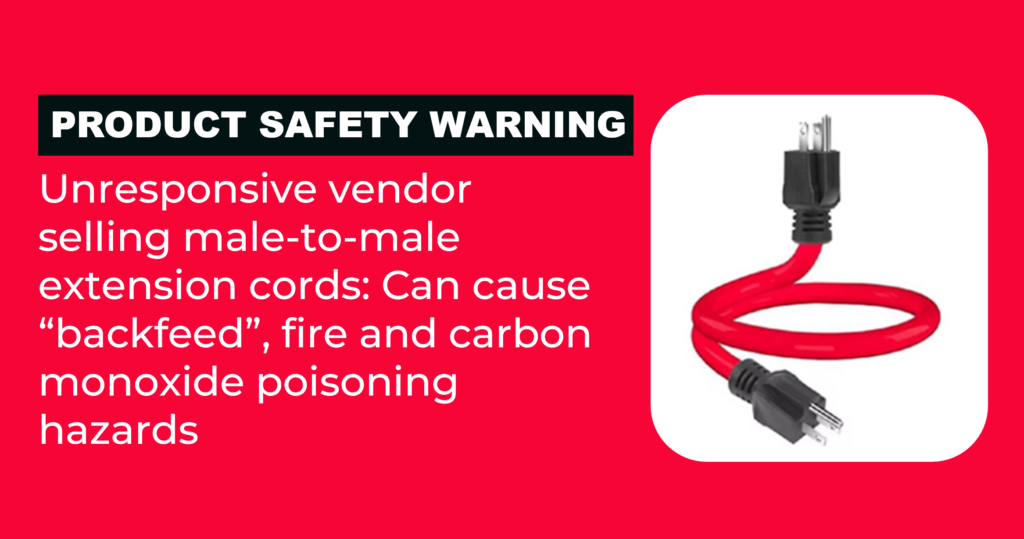
They look like ordinary extension cords — but a male-to-male extension cord is one of the most dangerous electrical products a consumer can own. Unlike a standard cord with a plug on one end and a receptacle on the other, a male-to-male cord has exposed prongs on both ends. When one end is plugged into a power source like a generator or wall outlet, the prongs on the opposite end become fully energized. Touch them — or let a child touch them — and the result can be fatal electrocution. These cords should not exist as consumer products, and their sale is prohibited by most electrical codes in the United States. Yet they remain available on overseas marketplaces and continue to reach American homes.
their sale is prohibited by most electrical codes in the United States
The greatest danger of a male-to-male extension cord goes beyond the exposed prongs. Consumers frequently use these cords to “backfeed” a portable generator into their home’s electrical panel during a power outage — plugging the generator into a wall outlet in the hope of powering the house. According to the Electrical Safety Foundation International’s Generator Safety guide, backfeeding bypasses every built-in safety mechanism in your home’s electrical system. Current flows backward through the panel and out through the utility transformer, energizing neighborhood power lines at lethal voltages — putting utility workers, neighbors, and emergency responders at risk of electrocution without any warning. Backfeeding also creates an immediate fire hazard inside the home because household wiring is not designed to carry load in reverse without a transfer switch. And because a male-to-male extension cord is typically short — often just 24 inches — it encourages placing the generator close to the home or in a garage, where carbon monoxide buildup can kill in minutes.
What should consumers do? If you own a male-to-male extension cord, stop using it immediately and dispose of it — it is not a product that can be used safely under any circumstances. If you use a portable generator, the only safe way to connect it to your home’s electrical system is through a professionally installed transfer switch, which isolates your home from the utility grid. Never run a generator indoors, in a garage, or within 20 feet of any window, door, or vent. And if a product warning or recall is issued for an electrical product you own, act immediately — do not wait for storm season to check whether your equipment is safe.
Final Thoughts
Electrical hazards don’t announce themselves — and products like male-to-male extension cords can sit in a garage for months before a homeowner learns they were subject to a safety warning. RecallSentry™, operated by the Center for Recall Safety, helps consumers stay ahead of product recalls and safety warnings so they can act before an accident happens. If you want to know whether the products in your home are safe, visit RecallSentry and let us keep watch for you..
Learn more about how RecallSentry helps protect families here:
https://centerforrecallsafety.com/recallsentry
How this Article is Relevant
For more information related to this topic, refer to this recent CPSC warning: CPSC Warns Consumers to Stop Using Ganjiang New District Yuslow Toys Sales Male-to-Male Extension Cords Immediately Due to Risk of Serious Injury and Death from Electrocution and Carbon Monoxide Poisoning Hazards.

 RecallSentry™ App
 FDA Recalls
 USDA Recalls
 NHTSA Recalls