 Missing Inspection Stamp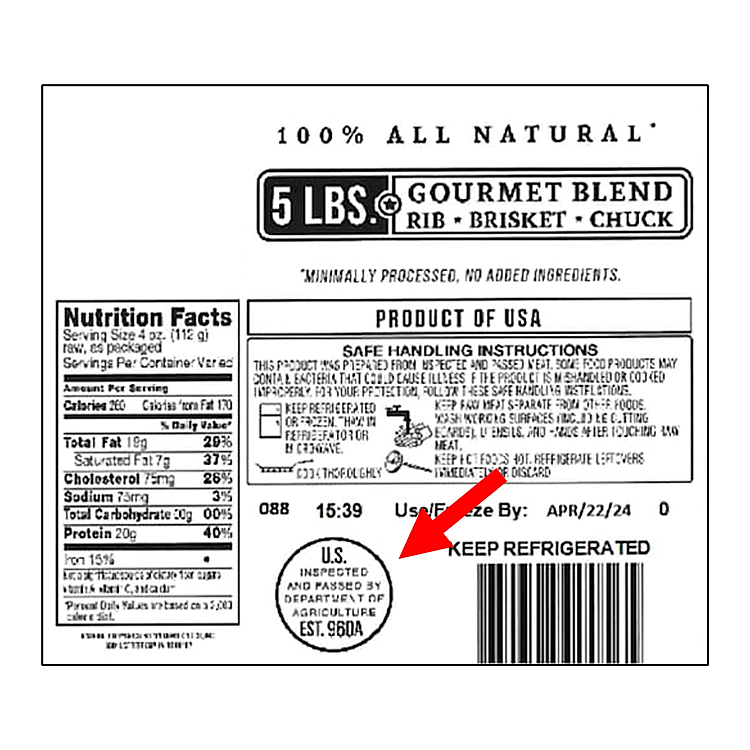
Meat products that bypass inspection—or carry fraudulent inspection marks—remove a key safety layer designed to catch hazards before food reaches your kitchen. Without verified oversight, consumers can’t rely on standard controls that help prevent contamination or misbranding. In practical terms, that can mean undeclared ingredients, temperature abuse, or sanitation lapses that aren’t obvious from the package alone.
A smart defense is to buy only from approved sources and keep packaging until you’ve served the product. “Approved” means the producing facility meets the standards of the responsible health authority, and there’s a paper trail (establishment IDs, lot codes) to support traceability if something goes wrong. Public-health guidance stresses this point: outbreak investigations frequently trace problems back to unapproved sources, which is why verifying suppliers and documentation matters. See this general overview of “approved sources”: Guidelines for Determining Approved Food Sources from San Diego County (PDF). County of San Diego
A smart defense is to buy only from approved sources
For households, build simple habits: stick to reputable retailers, beware of unlabeled or relabeled meats, and keep receipts and package labels so you can act quickly if safety news emerges. Store meats cold (≤40°F / 4°C), prevent cross-contamination, and cook to a safe internal temperature. If packaging looks altered or lacks clear origin info, don’t risk it—return or discard.
For retailers and foodservice teams, this category demands supplier verification (e.g., proof of inspection, COAs where applicable), tight receiving checks, and accurate lot tracking. Treat any gaps in documentation as a stop sign. A robust “hold-and-verify” step for questionable shipments can prevent one weak link from spreading across your menu or shelves.
Final Thoughts
Buying from approved, well-documented sources is one of the easiest ways to protect your family. Pair that with good storage, clean handling, and safe cooking, and you’ve covered the biggest risks.
See how RecallSentry helps households stay informed and take action: https://centerforrecallsafety.com/recallsentry.
How this Article is Relevant
For more information related to this topic, refer to this recent USDA recall: https://www.fsis.usda.gov/recalls-alerts/sabrositos-hondurenos-llc-recalls-various-meat-products-produced-without-benefit

 FDA Recalls
 CPSC Recalls
 USDA Recalls
 NHTSA Recalls